2009年12月31日 星期四

beef for king-Ma

Taipei Times - archives

http://help.funp.com/lib/exe/fetch.php/funp/tools/tools_postbtn_script.png?cache=cache

DITORIAL : Beef debacle is Ma’s opportunity


Friday, Jan 01, 2010, Page 8

Many people ask why the National Security Council (NSC) handled the Taiwan-US beef protocol instead of the Department of Health (DOH) or the Ministry of Foreign Affairs. The NSC later said it became involved because it was a matter of national security.

Now that the issue has gained notoriety, the Consumers’ Foundation (消基會) has expressed firm opposition to easing beef restrictions and both pan-blue and pan-green legislators reject the NSC’s and the Presidential Office’s handling of the case.

The US has now issued a strong response. Failure to resolve the issue might have an impact on ­Taiwan-US trade and economic ties, visa exemptions for Taiwanese and possibly, in some way, more serious concerns such as defense.

The Chinese Nationalist Party (KMT) may hold three-quarters of all legislative seats, but the outcome of legislative negotiations has resulted in stronger controls on US beef imports, overturning the original protocol. This is tantamount to rebellion and means the legislature is drawing a line in the sand, while also dealing Su a sucker punch. However, President Ma Ying-jeou (馬英九) will suffer most — with the situation spinning out of control, his authority as a leader will be dealt a severe blow.

Ma pays a great deal of attention to his image and stresses the importance of communication and compromise, but shows a glaring lack of skill in both. Despite cross-strait communication and compromise, the KMT has a hard time communicating with Democratic Progressive Party Chairperson Tsai Ing-wen (蔡英文). Likewise, his close circle of confidantes may be outstanding academics, but they don’t understand social dynamics and they lack political communication skills.

The US beef issue has resulted in a huge political hiccup, but Su’s highhanded manner is causing widespread discontent, even within the blue camp. When the government gave the green light to US beef imports, Minister of Health Yaung Chih-liang (楊志良) almost resigned. The legislature was not informed in advance, was not consulted during negotiations, and after the signing, was required to support the decision. Neither the opposition nor the pan-blue camp was willing to endorse the protocol and once the public protested, they went on the attack.

Had the NSC conducted a comprehensive assessment prior to its decision, it would have produced a report to persuade the public and legislature and allay concerns. The decision to fully relax restrictions on US beef imports was not based on an expert assessment, which highlights the NSC’s incompetence. The controversy is a longstanding one and if Su was not aware of its seriousness, then he was negligent.

When Su was forced to report to the legislature, he talked about national security and national interests. His condescending attitude annoyed and failed to convince legislators. This highlights Su’s ignorance; he should shoulder responsibility for the beef debacle.

The government’s weak response to Typhoon Morakot was a wake-up call for Ma after his presidential election victory, while the KMT setback in recent local elections created a sense of urgency. This is the chance Ma needs to carry out wide-scale party reform. The legislature has moved against the beef protocol and Ma has lost face at home and abroad. The only way for him to turn things around is to learn his lessons. Otherwise, cross-strait talks on an economic pact with China will prove to be another disaster.
This story has been viewed 218 times.

  • Advertising


  • 2009年12月30日 星期三

    Gmail - [I Love Taiwan] KMT did the same in the States

    Gmail - [I Love Taiwan] KMT did the same in the States

    http://help.funp.com/lib/exe/fetch.php/funp/tools/tools_postbtn_script.png?cache=cache
    Gmail hsutung yang

    [I Love Taiwan] KMT did the same in the States

    Taitzer Wang 2009年12月31日上午11:55
    回覆: taitzer@cinci.rr.com
    收件者: NATPA-Forum , I_Love_Taiwan , GlobalForumInt , "bay-area-taiwanese-american@yahoogroups.com"
    以下二則報導,有關王丹演講後,被中國學生霸佔麥克風密集發問,七零年代也在美國發生過,是當時國民黨的職業學生在台灣人聚合場地鬧場的慣技。1972 (73?) 年彭明敏在 Houston 的民眾大會,發生這種事。主辦單位事前有準備,顧有便衣警察,把發言鬧場的一個 KMT 抓岀場外。如何處置,已不詳記。
    Taitzer Wang 12/30
    ---------------------
    「紅衛兵」在台灣的大學囂張 中國民運人士王丹教授日前應邀到靜宜大學演講,竟遭到中國學生有組織的集體反制,輪流砲轟王丹;兩小時過程,這批「紅小兵」霸佔麥克風達一個小時之久。王丹事後接受記者訪問,憂心的警示台灣大學裡已出現中國學生組織性活動,令人毛骨悚然云云!有人質疑「共黨青年軍」滲透台灣,更有人諷刺台灣進入中國職業學生時代,「來台讀書的都不單純」。
    王丹指出的「紅色校園」現象,絕非單一事件,試舉三例。
    其一。今年十月底,「美國在台協會」(AIT)處長司徒文到政大國關中心討論台美關係,提問時一名來自中國的交換學生批判美國軍售台灣,會使台灣從「馬統」的「和平締造者」成為「麻煩製造者」,因而影響兩岸關係!中國學生囂不囂張?!
    其二。今年十一月初,台南野草莓播放「愛的十個條件」後,到成大校區進行討論。中國來的政治系交換教授邵某,從頭到尾立場堅定的為中國辯論,毫無民主、法治、人權觀念;辯不過了「就改以模糊焦點」來轉移視聽。
    其三。同樣是放映「愛的十個條件」,地點則在交大;同樣是中國來的學生,輪流而且毫無顧忌的搶奪主持人手中的麥克風,「以主人之姿教訓台灣學生」,這是當時與會的林秀幸教授所說,並說自己「深受震撼」,「他們怎麼可以在別人的國家如此粗暴、沒有禮貌」,林教授不認為「他們是職業學生,所以似乎更令人震驚。」
    情勢愈來愈清楚,他們不僅可能是「職業學生」,更可怕的是形同派到台灣的「紅衛兵」。「職業學生」台灣過去也有過,最大尾的就是「馬統」英九,「馬統們」是拿「中山獎學金」的「高級外省人」,偷雞摸狗打報告,然後讓國府製造黑名單,陳文成就是犧牲者。現在「高級中國人」的「紅衛兵」公然文攻武嚇,公然在民主校園鬧場搞鬥爭,他們父母輩的那一套「文革經驗」,會不會複製於台灣?這才叫人擔心。
    根據《天下雜誌》二○一○年國情調查,十八歲到二十九歲的年輕族群,自認「台灣人」的高達七五%,大學生自是大宗;故而中國學生與台灣學生可能爆發國家認同的衝突外,也會因為文明程度的落差而起風雲。現在縱橫全國的中國學生有九百人,一旦通過中國學生來台的政策法案,即使依教育部宣稱的「年限」二千人,台灣校園勢必充斥新型「紅衛兵」。要問的是台灣經得起經不起數以千計的「紅衛兵」有「組織」的「集體性」肆虐?民主校園會不會變成「殺戮戰場」?
    (作者金恒煒,當代雜誌總編輯)
    ........................................

    This is a follow up article. from Liberty Times.

    王丹提警訊 在台陸生疑有組織活動 〔記 者蔡智銘、張瑞楨、胡清暉疞謢X報導〕中國民運人士王丹質疑中國學生可能在台灣的大學裡已出現「有組織活動」,引發外界廣泛討論;王丹這兩天在他的 Facebook最新留言強調,他提出這個問題,完全是為了提醒台灣人,這樣的事情已在台灣出現了,絕對不僅僅是個人意見不同的問題。
    靜宜演說遭嗆 疑為中國職業學生
    前在政大擔任台史所客座助理教授的王丹,上週四前往靜宜大學演講「如何看到一個真正的中國」。在兩小時的演講過程中,出現六、七位中國學生密集發言,且多 長篇大論為中共辯護,技術性佔據時間。王丹質疑,這不像個人行為,「如果在台灣的大學裡,已經出現大陸交換生有組織的活動,這不是很令人毛骨悚然嗎?」
    王丹在Facebook指出,這不是危言聳聽,因為香港已經出現,港大那位發表「六四沒有屠城」言論的學生會會長,就是在大陸學生有組織的投票行為下當選的,「台灣人不要太傻太天真,要警惕!」
    王丹在演講中也強調,陳雲林來台說會尊重言論自由,但是一回頭,中國便把異議人士劉曉波判十多年,讓台灣人認識到的中國,就是中國政府是個騙子。王丹也對中共表達強烈抗議,呼籲外界正視。
    當天在場的靜宜大學台文系副教授廖瑞銘昨表示,他認為中國留學生可能有不得不為的苦衷。接洽王丹前往演講的靜宜台文所學生溫忠翰則表示,當天現場大概有十多位中國留學生,其中有七人集中坐在前排,演講過程認真做筆記,並強勢發問,言詞很不友善。
    網友聲援王丹 批陸生想製造衝突
    據了解,從第二位中國學生發言,王丹就覺得不對勁,認為是有組織的行動,因此還提醒注意發問時間。溫忠翰說,他們並未想到職業學生的問題,剛開始只是以為中國學生或許沒有聽過不同的聲音,對王丹批評中國才會有激烈反應,後來才覺得有些不對勁。
    丹的演講及中國留學生發問內容已貼上YouTube,網址為www.youtube.com/user/elvis0201網友表達聲援王丹,強調 「聲援言論自由,聲援自由主義,王丹加油!」也有網友在BBS留言表達憂心,指出中國開放陸生來台就讀,目的就是想造成台灣窩裡反;還有人質疑中共派職業 學生來台念書,未來台生和陸生將會在台灣的大學發生衝突。

    --

    You received this message because you are subscribed to the Google Groups "i_love_taiwan" group.
    To post to this group, send email to i_love_taiwan@googlegroups.com.
    To unsubscribe from this group, send email to i_love_taiwan+unsubscribe@googlegroups.com.
    For more options, visit this group at http://groups.google.com/group/i_love_taiwan?hl=en.

    2009年12月28日 星期一

    all are politics

    Taipei Times - archives

    Published on Taipei Times
    http://www.taipeitimes.com/News/editorials/archives/2009/12/29/2003462111

    Economics and politics cannot be separated

    By Wang To-far 王塗發

    Tuesday, Dec 29, 2009, Page 8

    The fourth meeting between Straits Exchange Foundation (SEF) Chairman Chiang Pin-kung (江丙坤) and Association for Relations Across the Taiwan Strait (ARATS) Chairman Chen Yunlin (陳雲林) focused on four issues: cooperation on standardizing inspections and certification; quarantine and inspection of agricultural products; avoidance of double taxation and cooperation on fishery labor affairs. These issues, in addition to the memorandum of understanding on financial supervision and management, as well as the opening up of Chinese investment in Taiwan, were designed to establish a single China market with the ultimate goal of unification.

    President Ma Ying-jeou’s (馬英九) administration claims these agreements simply promote the economy and prevent Taiwan from being marginalized. It says there is no political element to the proposed economic cooperation framework agreement (ECFA). It is, however, trying to hoodwink the public under the rubric of maintaining a separation of politics and economics.

    History tells us that there is no such thing as a separation of politics and economics. We have seen repeated instances of wars fought for economic interests: the Opium War, the Sino-Japanese War, the clashes between eight European powers and the Qing Dynasty in the 19th century, and, more recently, the US-led invasion of Iraq. Any given economic policy is inherently political.

    Beijing’s insistence on setting its “one China” policy as a precondition for negotiations is an example of politics leading economics. You only have to listen to Chinese President Hu Jintao (胡錦濤), Chinese Premier Wen Jiabao (溫家寶) and other Chinese officials to see the similarities between the ECFA and the closer economic partnership agreements China signed with Hong Kong and Macau. Both were economic cooperation arrangements with the precondition of acknowledging the “one China” policy.

    The aim is to incorporate Taiwan within the single China market. Beijing is trying to make Taiwan’s economy inextricably meshed with its own, with the ultimate political objective of being able to absorb Taiwan without a single shot being fired.

    Ma’s basic position is this: Taiwan has to be more competitive, given the trend toward globalization and fierce international competition, and its best bet is cooperation with China. His idea is to benefit from a division of labor, whereby research and development is carried out in Taiwan but the manufacturing is done in China. To this end, he wants to see Taiwan open up to China, and to concentrate on China for both investment and exports.

    Estimates published in the May 9 edition of The Economist showed Taiwan has already invested some US$400 billion in China. More than 80 percent of Taiwan’s investment overseas is in China. Taiwan, therefore, is well on the way to becoming overly dependent on China, economically speaking, and at risk of coming under its control.

    The folly of not distinguishing friend from foe, and in fact allowing oneself to become economically reliant on the latter, is exposing Taiwan to serious danger.

    Taiwanese investment in China is contributing to the rapid growth in China’s economy, providing it with both capital and technology. This is fueling the rapid modernization of China’s armed forces and helping it build a military empire. China has 1,400 missiles aimed at Taiwan, posing a serious risk to Taiwan’s survival.

    This is the result of the policy of not distinguishing friend from foe, and a catastrophe in the making born of the pretence of the separation of economics and politics. When will the Taiwanese wake up?


    Wang To-far is a professor of economics at National Taipei University.

    TRANSLATED BY PAUL COOPER

    Ma do as a king

    Taipei Times - archiveshe
    three pacts signed between Taipei and Beijing last week will automatically go into effect 90 days after approval by the executive branch, the Mainland Affairs Council (MAC) said yesterday. MAC Deputy Minister Liu Te-shun (劉德勳) said the three agreements do not require legislative review because they do not concern revisions to existing law.

    The Act Governing Relations between the Peoples of the Taiwan Area and the Mainland Area (台灣地區與大陸地區人民關係條例) stipulates that agreements that do not require legal amendment automatically take effect within a certain period of time after being referred to the legislature from the executive branch.

    The Democratic Progressive Party (DPP) caucus said yesterday that the legislature does not have sufficient time to review the content of the agreements.

    2009年12月26日 星期六

    Good signs are not quite enoug

    Taipei Times - archives

    EDITORIAL : Good signs are not quite enough


    Sunday, Dec 27, 2009, Page 8

    On Dec. 21, Taiwan Semiconductor Manufacturing Co (TSMC) chairman Morris Chang (張忠謀) announced a new compensation system for the chipmaker’s employees next year, including a 15 percent increase in base salaries beginning on Jan. 1.

    In a video message, Chang told employees that the hike in base salaries was part of structural changes to the company’s compensation system. But the move also showed that TSMC is working to attract and retain employees amid intensifying competition.

    Following a series of actions to cut or freeze salaries beginning late last year to cope with the global financial crisis, several Taiwanese technology companies have now announced — or are considering — upward adjustments in employee paychecks.

    According to various reports, Acer Inc, Compal Electronics Inc, AU Optronics Corp and MediaTek Inc are among the iconic tech firms likely to raise employee salaries next year. Companies in the real estate sector such as Sinyi Realty Co, Farglory Land Development Co and Chong Hong Construction Co are also reportedly planning salary hikes.

    Even so, it is too early to say the economy is on a firm footing and growing across the board. Last week, a local job bank’s poll showed that 37 percent of local firms have considered raising employee salaries next year, while 58 percent had not.

    The truth is that many Taiwanese companies are still fighting to stay in business and are hesitant to hire for want of solid signs of recovery. That’s why the nation’s unemployment rate fell only to 5.86 percent last month from 5.96 percent the previous month — meaning there are still 645,000 people out of work.

    The national statistics bureau said 150,000 jobs would need to be added to the market before the headline jobless rate can fall below 5 percent. That is a very challenging goal, though it should be noted that the Council for Economic Planning and Development last week unveiled targets for next year that include an unemployment rate of 4.9 percent.

    But a serious problem remains: The number of people who have been unemployed for more than one year — whom statistics officials refer to as “long-term unemployed” in their surveys — totaled 112,000 last month, up 4,000 from the previous month and marking the highest monthly level since January 2004.

    In addition, the number of unemployed middle-aged and elderly people reached 141,000 last month, up 3,000 from the previous month and the highest in three months.

    The problem facing people in these categories is that they face more obstacles in getting back into the workforce than any other category of jobseeker. This predicament poses a potential threat to the finances and stability of a large number of families in the long term.

    Another concern relating to the strength of economic recovery is the continuing decline in wages in the industrial and services sectors, which in turn hurts companies and discourages consumer spending.

    The decision by some companies to raise employee salaries next year is welcome news as it points to recovery in their sectors.

    However, even though economic growth is likely to be registered next year, uncertainties remain in the labor market and a noticeable increase in household income is not likely to emerge anytime soon.
    This story has been viewed 186 times.

    財團法人台灣大地文教基金會 - 台灣人拜台灣神 不做無根之民 - 【影片】20091220 人民要發聲大遊行-破黑箱大隊全紀錄

    財團法人台灣大地文教基金會 - 台灣人拜台灣神 不做無根之民 - 【影片】20091220 人民要發聲大遊行-破黑箱大隊全紀錄

    http://help.funp.com/lib/exe/fetch.php/funp/tools/tools_postbtn_script.png?cache=cache

    2009年12月25日 星期五

    林保華看台中衝突.doc

    林保華看台中衝突.doc林保華》如何看待台中最後一夜的衝突?

    馬英九政府不顧台灣民眾的感受,硬把用飛彈對著台灣人民、敵視台灣

    人民的陳雲林請來台灣。陳匪在台灣以“上國”姿態不斷發表無恥、輕薄的

    言論,而馬政府官員與馬黨黨棍則是做出阿諛奉承的姿態。只要有血性的台

    灣人,當然會走出來抗議。而那些站在共產黨專制政權一邊的台奸,就是巴

    不得發生一些流血事件,可以趁機使用鎮壓手段,向共產黨諂媚。馬英九的

    “連體嬰”(國民黨立委李慶華語)金溥聰事先叫民進黨不要“切割”,就

    暴露了他們的意圖,正如馬英九不斷用扁案不斷醜化民進黨來討好共產黨如

    出一轍,借以轉移他們的賣國賣台活動。

    陳雲林在台中的最後一夜,與國民黨高層人物杯晃交錯,互相吹捧的那

    個時候,外面則發生一位警察跌傷事件,這當然是相當不幸的事件,因為衝

    突雙方都是台灣人,如果流血的話,也是台灣人在流血。共產黨與國民黨的

    權貴人物,根本傷不到他們一根毫毛。他們還樂得挑動群眾鬥群眾,像看戲

    一樣看台灣人在流血。民進黨一直呼籲和平理性的抗爭,就是這個道理。

    我是這樣看這場事件的:

    第一,因為發生流血事件,而且是台灣人在流血,事件本身當然相當遺

    憾。

    第二,面對共產黨的挑釁與國民黨高層的奴顏卑膝,台灣民眾放鞭炮來

    抗議,也十分自然,是言論自由的一部分,不應該大驚小怪。因為台灣放鞭

    炮煙火十分自然,從來沒有看到警察來干預,為何就是陳雲林來是例外?難

    道是陳雲林感覺不舒服?

    第三,警察如果認為有何不妥,應該先警示,而不是貿然衝上車。因為

    在憤怒與戒備情緒下,誰衝上來都會引發民眾的反抗。因此如果有人因為如

    此而推警察下車,也是可以理解的一種自發的抵抗行動。在當時情況下,根

    本沒有時間考慮車子還在行進及可能導致的後果。因此就事論事來說,這只

    是意外。

    第四,既然說錄影明顯展示推警察的是一個人,事後警方大陣仗抓了六

    個人,顯然故意擴大事態,顯然要激化矛盾,好把台灣人打成“暴民”,把

    民進黨打成“暴力黨”。躲在幕後的宅男馬英九突然變成猛男跳出來,指責

    民進黨及蔡英文主席,這些人的變態心理,誰還看不明白?

    第五,國民黨高層與媒體趁機炒作,自然是因為得其所哉。然而如果這

    樣不是蓄意發生的事件被大事渲染,甚至是“超級暴力小英”,那麼去年馬

    英九親自操盤國安導致的警察打傷一批抗議陳雲林的民眾、記者與民代,馬

    英九成為“操級猛馬”?而那次被懲辦的不是那些指揮的警官,而是要起訴

    抗議民眾,有些警官反而升官,那不是對“暴力”採用兩套標準嗎?民主社

    會是這樣的“只許州官放火,不准百姓點燈”嗎?

    第六,民進黨的聲明太過軟弱。強調和平理性非常必要,但是一定要指

    明正是共產黨在台灣橫行,激怒台灣人民,才是事件的根本原因。放煙花只

    是導火線,沒有放煙花,也可能在其他事件上發生衝突,例如警察放統派份

    子進入綠營抗議隊伍裡也曾引發衝突,只是沒有傷人而已。但是難道因為要

    避免衝突而禁止任何抗議活動嗎?

    第七,被捕的六個人固然不是民進黨員,但是民進黨不必強調這點,

    為他們都是熱愛台灣的台灣人,是民進黨的支持者,發生這個事故是個意外

    。民進黨應該表示關心,甚至幫助被抓的民眾聘請律師,捍衛他們保衛台灣

    主權,抗議國共黑箱作業的基本人權。如果刻意切割,共產黨、國民黨那些

    流氓、權貴越是要往民進黨身上潑髒水,這是他們的欺軟怕硬本性決定的。

    即使這個事件解決了,陳雲林走了,只要共產黨亡台之心不死,只要國

    民黨權貴賣台之心不止,未來還會發生各種各樣的衝突。即使台灣人全投共

    而被“統一”了,衝突也還會發生,否則怎麼解釋中國每年會發生數萬宗的

    抗暴事件,以及共產黨統治中國六十年導致八千萬中國人的非正常死亡?

    我們也必須肯定這些到處出擊的抗議事件。只是遊行抗議,國共都不會

    理睬我們,正是十二月二十日遊行後群眾團體不斷的“游擊戰”,才是陳雲

    林在最後關頭臨陣逃脫,沒有在日月潭上船,保留日月潭的一點清白。因為

    陳雲林害怕日月潭變成梁山泊,出現“阮氏三雄”,而陳雲林則是高俅那個

    奸臣。(台灣時報林保華專論)

    (穿越30多年時空的重要評論,以及人生的酸甜苦辣,請看

    林保華部落格http://blog.pixnet.net/LingFengComment

    2009年12月23日 星期三

    馬的賤招盡出

    http://help.funp.com/lib/exe/fetch.php/funp/tools/tools_postbtn_script.png?cache=cache
    Gmail hsutung yang

    [I Love Taiwan] 為了一個共匪 馬的賤招盡出!

    北社-林冠妙 2009年12月24日上午10:40
    回覆: topmiao@twnorth.org.tw
    收件者: i_love_taiwan


    為了一個共匪 馬的賤招盡出!
    林冠妙2009/12/24
    21日下午長老教會東榮教會舉辦報佳音活動,行經台中港路三段和安和路口時(裕元酒店斜對面)被 警方攔下並兩次舉牌,經牧師、王定宇議員和幾位社團代表與台中第二分局長林信雄協調後,活動轉往統聯客運台中轉運站的停車場,並 同意參加的民眾可在此空地過夜。(統聯台中轉運站就在裕元酒店對面,為配合共匪的維安工作停止營業,所以當時沒有停放遊覽車,而 平時上下車的月台,也成了台中市警察局指揮所,有大批的警力、警棍、盾牌進駐)
    「搶救台灣行動聯盟」馬上調來了一輛舞台車,東榮教會及台南神學院的學生上台歌頌平安後,牧師 唱了一首他在幼稚園時代就學會的反共歌曲-「勇敢的小兵丁」:...拿起刀槍和共匪拼命...,牧師說國民黨竟然從幼稚園就開始教導 小朋友要拿起刀槍,實在很可惡!王定宇議員則說,他從來沒聽過牧師唱這種歌。
    當 晚的氣溫不到十度,有些民眾就直接躺在地上睡起覺來,既沒打地鋪、也沒蓋被子(沒有任何民意代表送來熱食或禦寒衣物)。沒多久,林信 雄局長在各家電視媒體 前出現,對著鏡頭說:胡志強市長怕大家冷到了,特地帶了五十件毛毯給大家(上面印著中華民國紅十字會),還特別強調是「借用」,不是 「贈送」,隔天早上得 要歸還。有民眾說:我們怕把東西弄壞了,不敢收,請拿回去吧。公投盟的工作人員大喊:不要作秀了,我們自己有準備睡袋,也有物資車, 但警方不讓物資車進 來,卻來這裡作秀演戲!
    上演完溫馨感人、賺人熱淚的的小丑秀後,林局長又請王定宇議員向大家宣布,統聯的車子待會要停進來,請 在場的民眾不要去破壞。結果隔天早上大家才恍然大悟, 原來這一切攏是假,這一切早就在國民黨的算計中,統聯的遊覽車已搖身一變成了大型拒馬、驅離群眾的工具,將民眾團團圍住,而從外面也 看不到裡頭進行的活 動。局長說統聯打算下午開始恢復營業,所以請民眾在中午前離開,他還假好心的說會幫大家找一個很好的地點。(攏是假,當然沒有!
    為了一個共匪,馬的政府無所不用其極,明的、暗的、柔的、硬的招數全用上了,在野黨的十八招還沒看到,馬 的賤招倒是先見識了!
    ==========================
    北社 辦公室主任 林冠妙  敬上
    北市 100  青島東路5號2樓之2
    電話:02-2396-0900
    傳真:02-2396-7233
    網址:www.twnorth.org.tw
    --
    You received this message because you are subscribed to the Google Groups "i_love_taiwan" group.
    To post to this group, send email to i_love_taiwan@googlegroups.com.
    To unsubscribe from this group, send email to i_love_taiwan+unsubscribe@googlegroups.com.
    For more options, visit this group at http://groups.google.com/group/i_love_taiwan?hl=en.

    cheat people

    Taipei Times - archives

    Published on Taipei Times
    http://www.taipeitimes.com/News/taiwan/archives/2009/12/24/2003461720

    CROSS-STRAIT TALKS: REPORTER'S NOTEBOOK: Jason Hu’s image juggles a lack of transparency

    By Mo Yan-Chih
    STAFF REPORTER, IN TAICHUNG
    Thursday, Dec 24, 2009, Page 3

    The government’s failure to be open and transparent with the itinerary of Association for Relations Across the Taiwan Strait (ARATS) Chairman Chen Yunlin (陳雲林) during his five-day visit has irritated local and foreign reporters.

    The fourth round of cross-strait negotiations started in Taichung City on Monday.

    The Mainland Affairs Council said it would make a last-minute announcement on Chen’s daily schedule, claiming it had to discuss things with ARATS representatives before finalizing Chen’s schedule.

    After President Ma Ying-jeou (馬英九) on Monday morning asked government authorities to make public most of the Chinese delegation’s itinerary, the council held a press conference to announce Chen’s daily itinerary and posted the information on its Web site.

    However, the Taichung City Government did not make public the itinerary for Chen’s tour of the city on Monday afternoon.

    Insisting on keeping Chen’s itinerary a secret, the city government divided reporters covering the event into two groups and arranged six shuttle buses to transport them — no one knew where — to certain locations.

    “We were on a journey to nowhere and I felt like I was being kidnapped by the Taichung City Government,” one reporter told the Taipei Times.

    Asked about the destination, both the bus driver and the Government Information Office (GIO) official on the bus said they did not know where they were going either.

    “I was told to follow the bus ahead of me,” the driver said.

    The first group of reporters was later taken to Chen’s first destination, a luxury apartment complex at an urban planning area in the city, while the second group was supposed to be taken to a local temple Chen was to visit later.

    However, all the reporters were transported to a hotel, where Hu invited Chen to view municipal developments from the top of the 46-story building.

    A newspaper reporter surnamed Wang criticized Taichung Mayor Jason Hu (胡志強) and his staff for their unapologetic attitude and their failure to explain why Chen toured a privately owned luxury apartment building instead of local government infrastructure.

    “Keeping the reporters in the dark is something that a rogue nation would do and [this] should never happen in Taiwan,” she said.

    The lack of transparency, the reporter said, also suggested that the decision to hold the meeting in Taichung may have been a means to boost Hu’s chances of getting re-elected.

    Another reporter who spoke on condition of anonymity said that five reporters from his newspaper were assigned to cover the “mysterious event,” adding that it was frustrating that Hu, a former GIO head, failed to strike a balance between serving as a host to Chen and his delegation, and addressing the needs of the media.

    “If we knew the two groups of reporters were going to the same destination, we would not have wasted so much manpower on that particular event. Hu and his team offended all the reporters and made fools out of themselves,” he said.

    Hu apologized for the lack of transparency in handling Chen’s itinerary, while insisting that keeping Chen’s schedule a secret was necessary.

    “The guests’ safety is our biggest concern and we have to make such arrangements for security reasons,” he said.

    Confronted by reporters over the city government’s failure to respond to Ma’s call for transparency, Hu said that unveiling Chen’s itinerary would cause unnecessary chaos as protesters would hound Chen.

    “I saw the Presidential Office’s call [for transparency regarding Chen’s schedule] on TV and I think I am being transparent enough,” he said.

    Asked about other city and county governments’ openness on the same matter, Hu refused to comment and said local government each had their own considerations.

    Chen visited Dajia Jenn Lann Temple (大甲鎮瀾宮) in Taichung County and West Lake ­Resortopia in Miaoli County yesterday. Both counties had communicated Chen’s itineraries to the media.

    Chen will head to Nantou County tomorrow and will stay at The Lalu Hotel at Sun Moon Lake.

    2009年12月18日 星期五

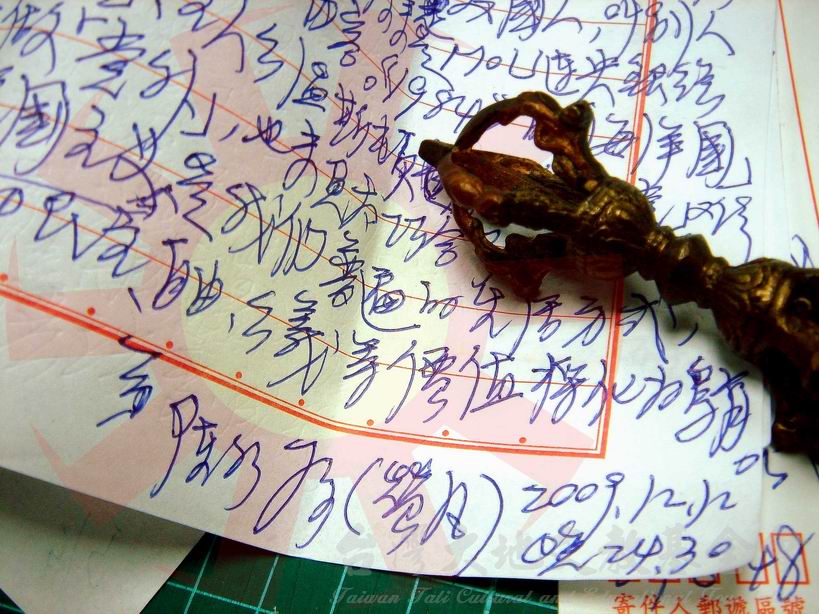
    阿扁總統給楊緒東醫師的回信(第12封)

    http://help.funp.com/lib/exe/fetch.php/funp/tools/tools_postbtn_script.png?cache=cache

    阿扁總統給楊緒東醫師的回信(第12封) 列印
    新聞報導 - 自由論壇
    作者 陳水扁總統 | 贊凡   
    2009/12/18, Friday

    (請點選上列小圖,觀看大圖)
    楊董事長、光贊同修您好!

    12月4日&9日的來信收悉。祝Australia之旅順風、平安、如意。

    想不到身為閣揆會說搞台獨的人是白痴的 話,儘管後來收回「或白痴」三個字,硬拗是不必要的贅語。但台灣的前途,在民主自由的國度,特別多元社會有不同的選項都應獲得尊重,您可以有自己的政治信 仰和不同主張,卻不能指摘意見不一樣的人是不負責任的「白痴」。這就是憲法所保障的意見表現自由。馬英九競選總統時的文宣說,台獨是台灣的選項,但不是中 國國民黨的選項。而對很多台灣人而言,台獨主張不僅是信仰,更是台灣的活路

    我在下一期12月16日出刊的蓬萊島雜誌.net阿扁札記,寫「選舉輸贏不是民進黨的一切」,呼籲中國欽差大臣陳雲林12月21日來台中出席第四次「江陳會」時,台灣人民應向全世界宣示「台灣中國,一邊一國」、「拒絕接受ECFA」兩大訴求,表達堅定「拒統保台」的意志和決心。

    光贊同修提到我的case經過一番沉澱過濾之後,會有「澄清」的一天,此時此刻了解到我被政治迫害的事實會成為「共識」。又說有法界人士向您 complain扁案會是一場「難於自圓其說」「上下不得的案件」,他們最怕touch此種非案之案,小英應該知道「政治迫害」的事實了吧;不應該還談一 些不痛不癢的「司法人權迫害」。遠的不說,馬騜在12月9日於中國國民黨檢討三合一選舉敗選原因的中常會上,竟然把敗選責任推給扁案辦得太慢及檢察總長陳聰明沒有下台。公然把手伸進法院,干涉司法審判,一點都不遮掩

    而12月10日世界人權日也是美麗島事件30週年,馬騜驕傲的表示把兩項世界人權公約正式國內法化,殊不知前一天他才在中國國民黨公開說出違背司法審判獨立的違憲談話;還有30年前美麗島事件發生時他在哈佛大學唸書,是如何在波士頓通訊批判痛罵黃信介、姚嘉文、林義雄、呂秀蓮、陳菊等民主前輩。美麗島事件正是蔣經國擔任總統時,未暴先鎮所製造出來的政治迫害黨外精英案件,蔣介石則是228事件的元凶,台灣六十年來兩大政治案件都跟兩位蔣家父子有關。馬騜上台後,又恢復對殺人魔王、政治劊子手、獨裁者的膜拜,完全是說一套、做一套的「真假仙」

    贊外同修來函分享靈修的小故事,有一個農夫在河裡沙洲工作,遇到豪大雨帶來溪水暴漲快把沙洲淹沒時,先後漂來一塊木板、一艘小破船、一棵枯樹,卻不知道這是上帝要來救他,還不往上跳,錯失三次可以逃生機會,最後不幸被大水淹死。是自己心裡設想要的結果而猶豫不去做,還怪上帝不給機會。很多的時候必須當機立斷,機會不是常常有,有時稍縱即逝,永不回頭

    30年前的美麗島事件爆發時,我才29歲,只是一個菜鳥律師,原先我也不敢接受參與弁護工作,不只因為當時的政治氣氛充滿肅殺恐怖,而是我年紀那麼輕,一 位海商法的律師接辦軍法大審的政治案件,自忖學識能力不足以勝任,後來太太的一句話:「明知道嘉文兄、義雄兄幾位道長不可能叛亂,卻要判唯一死刑。不敢承 辦,做律師有何路用?」我終於走上政治這條路,包括今天被羅織成獄,關押在鬼所,都是上帝的旨意。

    淑修同修12月9日來信分享喬治.歐威爾《1984》小說的部分章節,時空從過去、現在、未來相互交錯,可怕的是,相同的事情,一直重覆的出現在身邊。美麗島事件己經30年了,扁案的發生以及相關故事,除罪名從叛亂改為貪污外,我們所看到的是那麼相像,彷彿又回到30年前,蔣經國換成馬英九。舊獨裁者與新威權再怎麼聰明,該死的異端變成殉道者,將會有許許多多的殉道者出現,關了一個「阿扁」,還會出現更多的「阿扁們」

    《1984》一書「真理部」、「和平部」、「仁愛部」、「富裕部」的建築外邊大書特書黨的三大原則:「戰爭就是和平」、「自由就是奴役」、「愚昧就是力 量」,「2008」我們不是也看到類似的文字嗎?「633,馬上好」原來是玩笑話;「燒成灰也是台灣人」原來是自己當美國人,叫別人做中國人;「台灣的未 來應由2300萬人民決定」原來是MOU連央銀總裁也不知道,ECFA連立法院長亦不知內容。

    《1984》的「海洋國」難道是「海洋台灣」,統治者「內黨」、主人公溫斯頓屬於「外黨」,難道是指「中國國民黨」以外叫做「黨外」,也未免太巧合了。

    如果極權主義或新威權的黨國主義,變成是我們普遍的生活方式,則目前台灣人民所擁有的一切民主、自由、公義等價值,將化為烏有

    謝謝大地同修。
    台灣加油!
    弟  陳水扁(贊凡)
    2009.12.12晚24.30
    延伸閱讀:
    更多與阿扁總統(贊凡同修)的往來信件
    阿扁與台灣神的生死之約
    幫阿扁念經祈福

    分享:Facebook! Facebook! Twitter! funP!
    最後更新 ( 2009/12/18, Friday )
     

    2009年12月9日 星期三

    Parties condemn ‘harassmentt’ of Taiwan student

    http://help.funp.com/lib/exe/fetch.php/funp/tools/tools_postbtn_script.png?cache=cache

    Up Next
     
    Parties condemn ‘harassmentt’ of Taiwan student

    By Jenny W. Hsu and Shih Hsiu-chuan
    STAFF REPORTERS, WITH STAFF WRITER
    Wednesday, Dec 09, 2009, Page 1


    Lawmakers across party lines yesterday urged the Ministry of Foreign Affairs to lodge a protest against China over reports that a Taiwanese student in South Korea was harassed by a group of Chinese students for displaying a Republic of China (ROC) flag.

    Local media reported yesterday that the Taiwanese student, surnamed Lin (林), at South Korea’s Silla University in Busan, received first prize in a Korean-language speech contest. However, after the contest, Lin was chased and besieged by a group of Chinese contestants who were angry over Lin showing an ROC flag during the speech, they said.

    Chinese Nationalist Party (KMT) Legislator Justin Chou (周守訓) said Taipei should complain to the host and the Beijing government, and investigate whether officials at the Taiwanese representative office in South Korea were guilty of dereliction of duty in handling the matter.

    “It was regretful that this happened ahead of the upcoming cross-strait talks. The government should lodge a protest [with Chinese authorities] during the cross-strait talks,” Chou said.

    Describing the incident as “outrageous,” KMT Legislator Shyu Jong-shyoung demanded the administration condemn the Beijing government and its people for their unfriendly behavior.

    The government also has to voice its protest with the Seoul government if it failed to protect the Taiwanese student, Shyu said.

    “There was nothing wrong with displaying our national flag or whatever the Taiwanese student said in her speech. Freedom of expression is a right that we enjoy. The Chinese might not like it, but they can’t stop us from upholding this value,” Shyu said.

    KMT Legislator Yang Chiung-ying (楊瓊瓔) said Beijing should apologize although she believed that it was an isolated incident.

    “Displaying the national flag was normal behavior as it represents the country. Any normal person would do the same thing,” Yang said.

    Ministry Spokesman Henry Chen (陳銘政) said the Busan representative office would look into the matter, adding that the organizers had said there was no report of violence and that the media might have exaggerated it.

    The ministry is in contact with Lin to clarify what happened, Chen said.

    “We will do what needs to be done,” Chen said. “However, we must have a clear picture of the incident before taking any action such as lodging a protest.”

    Meanwhile, Democratic Progressive Party (DPP) lawmakers blamed the incident on President Ma Ying-jeou’s (馬英九) “diplomatic truce,” which they said was a form of self-denigration and humiliation designed to please Beijing.

    DPP Legislator Tsai Huang-­liang (蔡煌瑯) said what happened in Busan was a “typical example” of the failure of Ma’s diplomatic policy.

    “If our own government doesn’t even care about safeguarding the nation’s sovereignty, why should the citizens of any other country respect Taiwan? What the Chinese students did was indirectly permitted by Ma,” he said.

    DPP Legislator Chen Ting-fei (陳亭妃) said despite the so-called truce, tensions between people on both sides of the Taiwan Strait were worse than ever “because Chinese hostility toward Taiwan has spread from the government down to the individual level.”

    “Ma’s weak stand when confronted with China has made Chinese students overseas feel it’s perfectly fine to oppress Taiwanese students in non-political venues,” she said.

    “Ma kept saying the cross-strait détente will help bridge understanding between the two sides, but the reality is, it has only made the Chinese think we are easy pickings,” she said.


    COLD, BUT NOT ALONE
    Hundreds of taxi drivers block roads in front of the Taipei City Government and Taipei City Council yesterday evening, accusing authorities of backdoor maneuverings to allow major taxi fleets to monopolize profitable pick-up points while leaving smaller operators and individual cab drivers out in the cold.

    Also See: Taxicab drivers take protest to Taipei City Hall
    PHOTO: CHANG CHIA-MING, TAIPEI TIMES


    ECFA winners must give to society: Wu

    SINK OR SWIM: The premier said businesses that stand to benefit from an ECFA need to show the public that it is a matter of survival in the face of stiff competition

    By Shih Hsiu-chuan and Ko Shu-ling
    STAFF REPORTERS
    Wednesday, Dec 09, 2009, Page 3


    “Only irresponsible people and idiots would want to seek independence [for Taiwan].”— Wu Den-yih, premier


    Premier Wu Den-yih (吳敦義) yesterday said the government would urge businesses that stand to benefit from an economic cooperation framework agreement (ECFA) with China to give back to society.

    The cross-strait pact is expected to be negotiated early next year.

    “It would be wrong of us to say that [the businesses] are not giving anything back to society [already], but I think that there is room for growth in this regard,” Wu said in an interview with the UFO Network yesterday.

    These businesses could give back to society by pursuing environmental policies that are in the public interest, such as energy conservation and cutting greenhouse emissions, he said, adding that the government would urge them to come up with proposals on what they can do to make their contribution.

    Wu said businesses that stand to benefit from an ECFA need to show the public that an ECFA would help them sustain their businesses and that it is a matter of survival, because otherwise their exports to China would be subject to an import tariff of 9 percent on average. Losing their competitive edge to rival ASEAN countries, South Korea and Japan after an expanded trade pact takes effect would cause these companies to collapse, Wu said.

    Wu said the businesses that would be included in the “early harvest” list under an ECFA were the petrochemical, textile, machinery and computer component sectors.

    In the interview, Wu reiterated President Ma Ying-jeou’s (馬英九) guidelines for cross-strait policies: “no reunification, no independence, and no war.”

    This is the only option to deal with cross-strait relations under current circumstances, he said.

    “You don’t have the capability to unify [China] and you don’t want to be unified by it, nor are you capable of declaring independence, which would cause a split domestically, not to mention the possibility of danger from an external force,” Wu said. “Only irresponsible people and idiots would want to seek independence [for Taiwan].”

    Meanwhile, at a separate setting yesterday, Mainland Affairs Council (MAC) Deputy Minister Kao Charng (高長) said it would be detrimental to Taiwan’s development if the administration did not sign an ECFA with Beijing.

    Kao said that as Taiwan’s neighbors have been working toward free-trade agreements (FTA), the administration has made an effort to negotiate FTAs with other countries.

    But unless Taiwan inks an ECFA with Beijing, it will be very hard for Taipei to convince other countries to sign any agreement with it, Kao said.

    “To avoid Taiwan becoming marginalized and losing its competitive edge, we must sign an ECFA with Beijing so we can attract more foreign investment,” he said while attending a forum in Tainan County with local opinion leaders.

    “What we should be thinking about now is not whether we should sign [an ECFA], but rather when is the best timing,” he said.

    As the government hopes to sign it next year, it will make an aggressive effort over the next few months to promote the ECFA, whose content he said was very complicated, he said.

    At the forum, a representative from the county’s Dongshan Township (東山), Chen Ching-hui (陳清輝), urged the government to refrain from acting against public opinion and proposed holding a referendum on whether to sign an ECFA.

    In Taipei, MAC Chairwoman Lai Shin-yuan (賴幸媛) yesterday said the two sides would not sign or even negotiate an ECFA during the upcoming cross-strait talks in Taichung later this month, but will talk about whether to place it on the agenda for the next round of talks in the first half of next year.

    “Our plan is to see it formally made the negotiation topic for the fifth round of [talks],” she said.


    Are human rights still on the agenda?

    Wednesday, Dec 09, 2009, Page 8


    As the world celebrates International Human Rights Day tomorrow, Taiwan will also be presented with an opportunity to reflect on its progress, or lack thereof, in safeguarding human rights over the past year.

    Recent events are likely to cast a pall on Taiwan’s image. Just last week, Straits Exchange Foundation (SEF) Deputy Secretary-General Maa Shaw-chang (馬紹章) announced that the Taichung City Government would designate a 30,000-ping (nearly 100,000m²) “protest zone,” or “opinion plaza,” so that protesters could make their voices heard during the fourth round of negotiations between SEF Chairman Chiang Pin-kung (江丙坤) and his Chinese counterpart Chen Yunlin (陳雲林) later this month.

    Although Taichung Mayor Jason Hu (胡志強) put the brakes on what he called a “premature” idea, adding that it would be unconstitutional to deprive people of their right to assemble outside a designated area, Taiwan’s international image as a country that, unlike China, honors freedom of speech, was nevertheless tainted.

    Several international media organizations have expressed interest in sending crews to cover the ­Taichung talks, not so much for the talks themselves, but rather over expectations that the “orderly protests” might get out of hand.

    And it gets worse.

    As the Taipei Times’ sister newspaper, the Liberty Times wrote yesterday, the Taichung City Police Bureau has reportedly attempted to “persuade” shops around the talks’ hotel venue to close during the meeting over concerns of possible riots in the area.

    It is understandable that law enforcement officers would seek to maintain social order. But the assumption that protesters will be violent highlights a bias against dissent and reveals an authoritarian mindset that stigmatizes protesters regardless of their cause or behavior.

    No wonder the failure to revise the Assembly and Parade Act (集會遊行法) continues to top the list of the public’s 10 main concerns about human rights this year, as a survey by the Taiwan Associations for Human Rights has shown.

    Taiwan may have completed its transition from the “hard” authoritarianism left behind by dictator Chiang Kai-shek (蔣介石) to a “softer” authoritarian rule initiated by his son and successor Chiang Ching-kuo (蔣經國) in the 1980s, but to this day, many people believe that an authoritarian reflex lingers among government and police officers, which has become the biggest hurdle to a legislative revision of the Act.

    It is also inexcusable that the administration of President Ma Ying-jeou (馬英九), which has deeply immersed itself in cementing ties with China, has failed to take people’s rights to assemble with equal urgency.

    Whether full engagement with China will bring economic benefits to the nation’s export-oriented economy remains to be seen. But in every contact with China, Taiwan can — and should — use the opportunity to fulfill its international obligations by playing a bigger role in encouraging Beijing to democratize and respect human rights.

    By failing to do so and focusing solely on improving its economy — which seems to be the Ma administration’s favored approach — Taiwan will fail in its responsibilities as a stakeholder in the international community.


    Kaohsiung Incident a good reminder

    By Gerrit van der Wees
    Wednesday, Dec 09, 2009, Page 8


    Tomorrow marks the 30th anniversary of the Kaohsiung Incident of 1979. It was a watershed in Taiwan’s political history, as it galvanized the democratic opposition in Taiwan and overseas Taiwanese into action, and thus ushered in the beginning of the end of the Chinese Nationalist Party’s (KMT) martial law and one-party police state.

    In Taiwan itself, the event is being commemorated with a series of activities, including seminars, a photo exhibition and a concert in Kaohsiung. The irony of the situation is that one of the defendants in the “sedition” trial that followed the Incident was Chen Chu (陳菊), now mayor of Kaohsiung.

    Over the years, much has been written about the significance of the events of December 1979, the subsequent trials and the Incident’s impact on Taiwan’s transition to democracy. Here we want to highlight two aspects: one, what was said during the incident, and did it constitute “sedition,” and two, how it played a role in galvanizing the overseas Taiwanese community.

    The event, which started out as a Human Rights Day celebration by the nascent democratic opposition, turned into a melee after the police surrounded the crowd and started using teargas. Three days later, the KMT authorities used the disturbances as an excuse to arrest virtually all leaders of the opposition. Eight major leaders were accused of “sedition,” tried in a military court and sentenced to prison terms ranging from 12 years to life imprisonment.

    What is less well-known is that the course of events during the evening of Dec. 10 were later chronicled in a publication called The Kaohsiung Tapes, published in December 1981, which is now available at www.taiwandc.org/kao-tapes.pdf. The document presents a word-for-word account of what was said during the evening, and strongly contradicts the KMT government’s claim that the speakers were “inciting” the crowd to “overthrow” the government — the basis for the sedition charges.

    The document shows that the police were primarily responsible for the disturbances, when heavily armed military and police units encircled the crowd and started to throw teargas into the peaceful demonstration. The melee occurred after the crowd broke through the police cordon to escape the teargas.

    On the second point: How did the Incident play a role in galvanizing the overseas Taiwanese community? It is of course well-known that the defendants and their defense lawyers became the core of the Democratic Progressive Party (DPP), which was founded in 1986. Their roster reads like the Who is Who of the DPP.

    What is less well-known is that the Incident provided a strong impetus for overseas Taiwanese to get organized and to speak out. Before “Kaohsiung” there were pro-democracy organizations and groups, such as the World United Formosans for Independence, the various Taiwanese associations (in the US, Europe, etc) and the Overseas Alliance for Democratic Rule in Taiwan, which was organized by Kuo Yu-hsin (郭雨新). But their impact was relatively limited.

    After “Kaohsiung,” the existing active clusters attained critical mass and gained considerable political power and influence in their host countries. In the US, Canada and in European states the overseas Taiwanese organized themselves and started to lobby the US Congress and European parliaments and governments.

    This increased political awareness and activity led to the establishment of a number of like-minded organizations, such as the North American Taiwanese Professors Association (1980), the North American Taiwanese Women’s Association (1986) and the Formosan Association for Public Affairs (FAPA) — set up in 1982 by Mark Chen (陳唐山), who later became foreign minister; Chai Trong-rong (蔡同榮) and Peng Ming-min (彭明敏).

    FAPA was specifically set up to work with the US Congress, and it has gained strong support for human rights and democracy in Taiwan. Through its activities, the “Gang of Four” (senators Ted Kennedy, Claiborne Pell and representatives Stephen Solarz and Jim Leach) frequently and forcefully spoke out for an end to the KMT’s one-party dictatorship and the 40-year-old martial law.

    After Taiwan made its successful transition to democracy in the late 1980s, FAPA and the other organizations reoriented their work to support Taiwan’s membership in international organizations, such as the UN and the WHO.

    Sadly, the erosion of justice under the President Ma Ying-jeou’s (馬英九) administration, and the drift toward China at the expense of democracy and hard-earned freedoms are now necessitating a renewed focus on human rights and democracy in Taiwan.

    The anniversary of the ­Kaohsiung Incident presents a good opportunity for the people in Taiwan and abroad to reflect on what has been achieved — and what can so easily be whittled away.

    Gerrit van der Wees is editor of Taiwan Communique, published in Washington by the Formosan Association for Public Affairs.


    PLA generals are much too confident

    By Lin Cho-shui 林濁水
    Wednesday, Dec 09, 2009, Page 8


    President Ma Ying-jeou (馬英九) has repeatedly called for ­confidence-building measures between the armed forces on either side of the Taiwan Strait, as did his predecessor Chen Shui-bian (陳水扁). But military affairs experts from China and Taiwan think this is an unrealistic and amateurish proposition. Chinese experts have given persuasive reasons for this view. As retired Chinese Lieutenant General Li Jijun (李際均) said recently, “If the People’s Liberation Army [PLA] were completely transparent toward Taiwan, it would make it equally transparent for countries that have third-party relations with Taiwan … so it would be hard to implement.”

    A seminar on the theme of 60 years of cross-strait relations was held in Taipei last month, followed by one on the subject of Sun Zi’s (孫子) Art of War in Beijing. The odd thing is that at both these forums, retired PLA officers, who in the past have shown no interest in promoting cross-strait confidence-building measures, eagerly and earnestly put forward various plans for doing just that.

    For example, they suggested that China and Taiwan could start out by building friendly relations through joint patrols in the South China Sea. Such a proposal is fantastic and full of problems.

    There are longstanding tensions in the South China Sea, with ASEAN states looking to the US to back them up. The ideas proposed by Li and others would require Taiwan to reverse the military alliances it has long relied on for its security, from the island-chain containment camp headed by the US to the very camp the US wants to contain.

    It would be hard to realize such a plan. If it did come to pass, it would have a dramatic impact on the Pacific island-chain containment strategy, on Japan’s oil supply routes, on the emerging Indian-Japanese joint security framework and more. By coopting Taiwan’s armed forces and placing Taiwan, the Pratas Reef and Itu Aba Island — the largest of the Spratly Islands — within its sphere of influence China would gain a military advantage in the South China Sea, turning it into, in effect, a Chinese inland sea.

    Taiwan’s air force still enjoys partial air superiority and its naval power is about half that of China. If the above proposals were to become reality, China would be able to transfer the forces it has tied up to deal with Taiwan, and instead join with Taiwan in presenting a united front against outside forces, greatly increasing its power projection.

    The Chinese military’s purpose in trying to get Taiwan into line goes beyond regional considerations. It would achieve the dream China has cherished ever since the Opium Wars of expelling the Western powers from East Asia and reviving the dominant position the Qing empire enjoyed during its early years.

    It is also, however, by no means clear what exactly the Chinese generals mean by “friendly” when they talk of cooperation between the armed forces on each side of the Strait and call them “friendly forces.” If seen in terms of Beijing’s position that cross-strait relations are a matter of “one country, two systems,” Taiwan’s armed forces and the PLA would be parallel forces under the central government of the People’s Republic of China. Taiwan’s armed forces would have effectively surrendered and joined the other side. Such a scenario, in which Beijing would enjoy all the advantages, is certain to come to nothing.

    If, on the other hand, China and Taiwan were to agree to recognize each other as having equal political status, “friendly forces” would be allied forces. In that case, relations between the two would not just be a matter of confidence-building measures, but a proper military alliance. Although this would not satisfy dogmatic calls for unification, that would not detract from its strategic importance. This scenario, however, is equally problematic.

    The PLA assures us that there is no need to worry about surrounding countries taking countermeasures if Taiwan changes sides in military alliances. The reality, however, is that China, rising power as it may be, is not a great power like the US that can deliver the tools of development around the world. This makes the China option unattractive for Taiwan.

    In an alliance in which one partner would be much bigger than the other, and having discarded the support of its original allies, what bargaining chips would Taiwan have left to use in the event of cross-strait disputes?

    These are all tough questions to answer. As KMT Legislator Shuai Hua-ming (帥化民), a pan-blue strategist, said recently, “Taiwan survives in the niche created by the conflict between the Western powers and China. In cross-strait affairs, we cannot rely too much on a peace agreement or mechanism to achieve a breakthrough.”

    The proposals for military collaboration are fraught with problems. It is only within the context of China’s greater strategy of a “peaceful rise,” and “peaceful diplomacy and a peaceful resolution of cross-strait issues” that these ideas seem to have some mileage. Since 2004, China has been trying to achieve mutual trust with other countries. It has repeatedly made such overtures to the US following last month’s talks between US President Barack Obama and Chinese President Hu Jintao (胡錦濤).

    Some senior PLA officers have opened the Pandora’s box of ­confidence-building measures. It may be hard to shut the box now that it has been opened. Difficult as the proposals for cross-strait convergence may be to implement, they demonstrate imagination on the part of PLA officers in a rising China, as well as their ambition to unsettle the order in East Asia.

    Lin Cho-shui is a former Democratic Progressive Party legislator.
     
    Up Next

    2009年12月7日 星期一

    arrogant ma

    http://help.funp.com/lib/exe/fetch.php/funp/tools/tools_postbtn_script.png?cache=cache


    Published on Taipei Times
    http://www.taipeitimes.com/News/front/archives/2009/12/08/2003460439
    ECFA to continue despite poll outcome
    TRANSPARENCY PROMISES: The president said he would forge ahead with the ECFA, but promised to keep the legislature informed and make the negotiations transparent
    By Shih Hsiu-chuan and Ko Shu-ling
    STAFF REPORTERS
    Tuesday, Dec 08, 2009, Page 1
    “There is no need to fine-tune our cross-strait policy.”

    — Wu Den-yih, premier

    Premier Wu Den-yih (吳敦義) said yesterday there was no need to revise the government’s cross-strait policies despite the party’s lackluster performance in Saturday’s local elections. Wu made the remarks when asked for comment on whether the poll results would affect the government’s plans for an economic cooperation framework agreement (ECFA) with China or its other cross-strait policies.

    “There is no need to fine-tune our cross-strait policy,” Wu said, adding that the government would pursue policies in line with the principles of “putting Taiwan first” and “benefiting the public.”

    An ECFA can be signed as long as three conditions are met: The nation needs it, the public supports it and there is legislative oversight, he said, adding that the ECFA will proceed as scheduled — meaning that it should be inked at the fifth round of cross-strait talks early next year.

    “That’s the plan for now, but we need more public support,” Wu said. “Surveys conducted recently showed that approval rates were between 50 and 56 percent. If the rate goes above 60 percent and the disapproval rate falls below 20 percent that will be better for signing the ECFA.”

    The government has not dispelled the public’s misunderstandings concerning the ECFA, Wu said, adding that it would step up its efforts.

    “In southern Taiwan, there are people saying that the government has allowed [imports of] many agricultural products from the mainland since [President Ma Ying-jeou (馬英九) took office], but that’s not true … Also, on labor matters, there is a false rumor about [Taiwan importing] mainland workers [after singing an ECFA],” Wu said.

    At a separate setting yesterday, Ma vowed to forge ahead with the ECFA, but promised to keep the legislature informed and make the negotiations and content as transparent as possible.

    Ma said his administration would work to convince the public that not signing an ECFA would be detrimental to the nation.

    “Our policy is to take a Taiwan-centric approach,” he said. “We will further the interests of Taiwanese. Cross-strait negotiations will benefit both sides if they are conducted under the principle of equality and dignity.”

    Ma made the remarks while meeting winners of this year’s National Outstanding Manager Awards at the Presidential Office yesterday morning.

    With the fourth round of high-level, cross-strait talks scheduled to take place in Taichung later this month, Ma said there would not be any “politically sensitive language” in the agreements to be signed because they were “very technical” in nature.

    The talks between Straits Exchange Foundation Chairman Chiang Pin-kung (江丙坤) and his Chinese counterpart, Association for Relations Across the Taiwan Strait Chairman Chen Yunlin (陳雲林), will address four issues: fishing industry cooperation, quality checks of agricultural products, cooperation on inspection and certification, and preventing double taxation.

    Ma said he has asked government agencies to make the four agreements as transparent as possible. Citing the financial memorandum of understanding (MOU) recently signed with Beijing, Ma said the public would know that it is not political as soon as the Financial Supervisory Commission makes public the content. In order to maintain the principles of equality and dignity, Ma said both sides had used less sensitive titles to dodge the sovereignty issue.

    “Because the public is very concerned about this, we are very sensitive in handling the matter,” he said.

    As the two sides will “exchange opinions” on an ECFA during the Chiang-Chen meeting, Ma said the government would report to the legislature before the ECFA is signed and send the agreements to the legislature for approval after they are signed.

    “Thus there will be discussion and the information will be transparent,” he said. “If not, the public could misunderstand and we would have greater difficulty pushing this policy.”

    Calling the ECFA necessary, Ma said it was not easy to sign free-trade agreements with the nation’s major trading partners because they were not diplomatic allies.

    “But if we can make a breakthrough in an ECFA with the mainland, other countries may be more willing to negotiate with us and this is very important for Taiwan,” he said. “If we don’t overcome such obstacles, it will have a negative impact on Taiwan’s trading business. This is a problem that no party in power can avoid.”

    On Chinese agricultural products, Ma said the government had not allowed imports of new products over the past 19 months, nor would they do so if the country signed an ECFA or “anything else,” he said.

    At a separate setting yesterday, KMT Legislator Huang Chao-shun (黃昭順) said the KMT risked another blow in future elections unless the government revises its cross-strait policies.

    “The ECFA, cross-strait policies and US beef [imports] caused the KMT to fail in [Saturday’s] elections. Voters taught the KMT a lesson. If it does not change, they will teach it another lesson,” she said.

    Meanwhile, at the legislature, Minister of Economic Affairs Shih Yen-hsiang (施顏祥) agreed with KMT Legislator Lai Shyh-bao’s (賴士葆) proposal that a TV debate be held to inform the public about the ECFA.

    Lai said the ECFA lacked public support mainly because the ministry had not succeeded in promoting the advantages of the pact. He suggested a TV debate could help.

    Shih said many people in farming regions remained unconvinced that the ECFA would not result in imports of Chinese workers and agricultural products, despite repeated assurances from the ministry.

    Some underground radio shows are misleading people about the ECFA, Shih said, adding that a TV debate “could be planned” as Lai suggested.

    In related news, Legislative Speaker Wang Jin-pyng (王金平) said that Taiwan must try to sign free-trade pacts with the US, Japan, Singapore, the EU and Southeastern Asian countries after inking an ECFA, as this would ease public misgivings about relying too much on China.

    Wu also said that a minor Cabinet reshuffle was planned for Dec. 20.

    Wu dismissed allegations that the reshuffle was related to the elections, but said: “It would be suitable for excellent county commissioners and city mayors to continue to serve the public in the Executive Yuan or at state-run enterprises once they retire as local government heads.”

    2009年12月5日 星期六

    Letting the public decide

    http://help.funp.com/lib/exe/fetch.php/funp/tools/tools_postbtn_script.png?cache=cache
    ECFA: Letting the public decide
    By Cheng Li-chiun 鄭麗君

    Sunday, Dec 06, 2009, Page 8 Premier Wu Den-yih (吳敦義) recently said in an interview that the government would only sign an economic cooperation framework agreement (ECFA) with China under three conditions: if the nation needs it, if the public supports it and if there is legislative oversight. The three conditions appear to be reasonable, but the government is using them to deprive voters of their right to make decisions.
    First, does Taiwan really need an ECFA with China? We must ask whether the “one China” principle is the premise for the government’s negotiations on an ECFA with Beijing: In other words, does the government view Taiwan as part of China? This is something the government must make clear to the public.

    If the negotiations are based on the “one China” premise, the government must hold a referendum on whether or not the public supports this premise to ease public worries. It should then allow the public time to thoroughly discuss and gain an understanding of the ECFA before making a decision. This is the only way to handle the issue according to the Constitution, which states that sovereignty rests with the people.

    Second, Wu said an ECFA would only be signed if there is legislative oversight. The Constitution gives the legislature the right to monitor the Cabinet. However, given that the legislature is dominated by the ruling party, it cannot fully arbitrate over social disputes or ease public concern. That is why a major policy such as signing an ECFA must be decided in a referendum.

    Third, Wu said support for an ECFA must command more than 60 percent of public support in opinion polls. While I do not dispute the importance of opinion polls in demonstrating the will of the people, the government has often made use of them to manipulate public opinion when dealing with highly debated issues. When politics takes precedence over professionalism, the government could distort public opinion by using biased polls. For example, when various media agencies reported that government approval ratings had hit an all-time low, the administration responded with its own opinion poll showing wide public support, causing widespread doubts about the reliability of official public polls.

    Even in Western democracies where public opinion polls are highly developed, people know that public polls are not a substitute for referendums. This is a tenet of democracy and political common sense. The government should stop using public polls as an excuse for not amending the Referendum Act (公民投票法) and give the public the right to decide.

    The Referendum Act makes it difficult to hold a vote given its stringent requirements: first, 0.5 percent of all eligible voters in the latest presidential election must sign a referendum proposal, and then, 5 percent of voters must sign a reviewed and approved referendum proposal to establish the referendum. This threshold is even higher than the number of joint signatures required to support the registration of a presidential candidate.

    I suggest that this unreasonable law be amended, making the joint signatures of 1.5 of all eligible voters sufficient to establish a referendum.

    The Referendum Act also requires that half of all eligible voters in the previous presidential election vote in a referendum for it to be valid. I suggest this be changed to a plurality, or half of all who actually voted in that election.


    Cheng Li-chiun is the chief executive officer of Taiwan Thinktank.

    2009年12月4日 星期五

    「殺雞儆猴」用意至為明顯

    http://help.funp.com/lib/exe/fetch.php/funp/tools/tools_postbtn_script.png?cache=cache
    總統府前侍衛長何雍堅中將涉嫌在憲兵司令任內侵吞公款私用,遭到軍事高檢署收押禁見。先前突然下台的軍情局長葛廣明中將,近日也已被移送軍高檢偵辦。消息人士透露,國防部長高華柱已表明,從嚴究辦將領涉貪案件。
    近期另一位與何雍堅發跡背景類似的「前朝紅人」將領,案件也在偵辦中,很可能也會起訴收押。
    總政戰局軍紀監察處日前突襲搜索憲令部情報處,查獲證據顯示,何雍堅在司令任內涉嫌指示部屬,浮報情報經費。軍高檢隨即約談何雍堅,判定他「涉及貪瀆罪嫌重大,並有串證之虞」,向高等軍事法院聲請羈押,三日凌晨裁定羈押禁見。
    何雍堅在扁時代由副侍衛長升侍衛長,再轉憲兵司令。何雍堅的哥哥何雍慶是中正大學教授,熱心嘉義地方政治,李登輝時代曾爭取國民黨立委提名,後來與縣長陳明文友好。外界認為扁上任後拔擢何雍堅,除了他「省籍正確」之外,也有拉攏地方勢力的意味。
    消息人士指出,近年軍中風紀問題頻傳,二次政黨輪替以來,馬英九總統已指示國防部徹底清理。但前部長陳肇敏個性溫和,難以大刀闊斧。馬政府換上高華柱,就是希望他扮「清道夫」黑臉,整頓嚴重腐蝕的軍紀。
    高華柱上任以來,幾位爭議性將領的案件,紛紛出現「案情突破」。因為貪污受審的前六軍團司令程士瑜中將,日前被判刑十六年半定讞,「殺雞儆猴」用意至為明顯。消息人士預告,未來可能還會有「更大案」被爆出來。

    Red terror

    http://help.funp.com/lib/exe/fetch.php/funp/tools/tools_postbtn_script.png?cache=cache
    EDITORIAL : Is bad news not so bad in China?


    Saturday, Dec 05, 2009, Page 8 News that 10 journalists were charged with covering up a mining accident in China’s Hebei Province is an intriguing development in a state wary of free media.
    Reporters being charged for failing to cover a story involving corruption is a far cry from the usual news of them being browbeaten after publishing embarrassing material. But the journalists not only failed to report the story — they are accused of accepting US$380,000 in bribes from officials to stay quiet.

    The accident took place on July 14 last year in Yuxian County — 80km from Beijing and just three weeks before the start of the Beijing Olympics. Dozens were killed, and it is likely that safety regulations were being flouted at the mine — as in most accidents in Chinese mines, the most lethal in the world.

    For China, the Games were a chance to dazzle the world, but in the months leading to this moment of glory, Beijing was gripped by a fear of the foreign press “seizing on” negative news. Riots had erupted in Tibet in March, prompting Beijing to seal off the region. In the following months, everything from smog and subpar products to the deaths of enormous numbers of schoolchildren in the Sichuan Earthquake put pressure on China’s leaders — and then there was the controversy over underage Chinese gymnasts during the Olympics.

    Only after the Olympics did it become clear that another scandal was covered up prior to the Games. Officials in Shijiazhuang and a company called Sanlu knew that infants were being sickened by milk powder tainted with the industrial chemical melamine.

    Last week, China executed two people for selling tainted milk and protein powder. Now, it has charged journalists and officials in the Hebei accident, suggesting that the central government is trying to signal a change. The message is, at least superficially, that it is not afraid of confronting and dealing with scandals. Moreover, cover-ups are apparently no longer acceptable, no matter the circumstances. We are now led to understand that the public interest had always trumped the risk of embarrassing the government — even if, at the time, Beijing was busy preparing the best Olympics ever.

    Is this message credible? Is the country that embarrassed itself again and again over its botched SARS cover-up finally appreciating the damage caused by punishment of journalists and whistleblowers?

    Journalists in China are regularly intimidated into silence or punished for covering sensitive topics. Reporters without Borders has said that China has the highest number of imprisoned journalists in the world, while Xinhua’s staff are kept tightly in line to prevent unsanctioned reporting.

    But there is another interesting aspect in the Hebei case. If these journalists were bribed not to report on Yuxian’s tragedy, this might indicate that no central government orders had been issued to cover up the incident. Such orders would not require bribing journalists, who defy media bans only at extreme risk to their careers and personal safety.

    China has struggled for years in a globalized and wired world to contain news of its scandals. Yet, time and again, scandals are revealed. The fact that the authorities were able to contain news of the Yuxian mine accident for 85 days is a testament to the extent of their efforts. But in the end, there were too many loose ends — and too many angry victims.

    Incidents that are covered up but which then become public knowledge are magnified in notoriety, damaging the reputation of every level of government. Given the new risks for those involved in hiding the truth, it will be interesting to see what extent China moves toward accountability, if only for the time being.

    Plurk

    搜尋此網誌

    facebook/hsutung

    追蹤者

    Google廣告